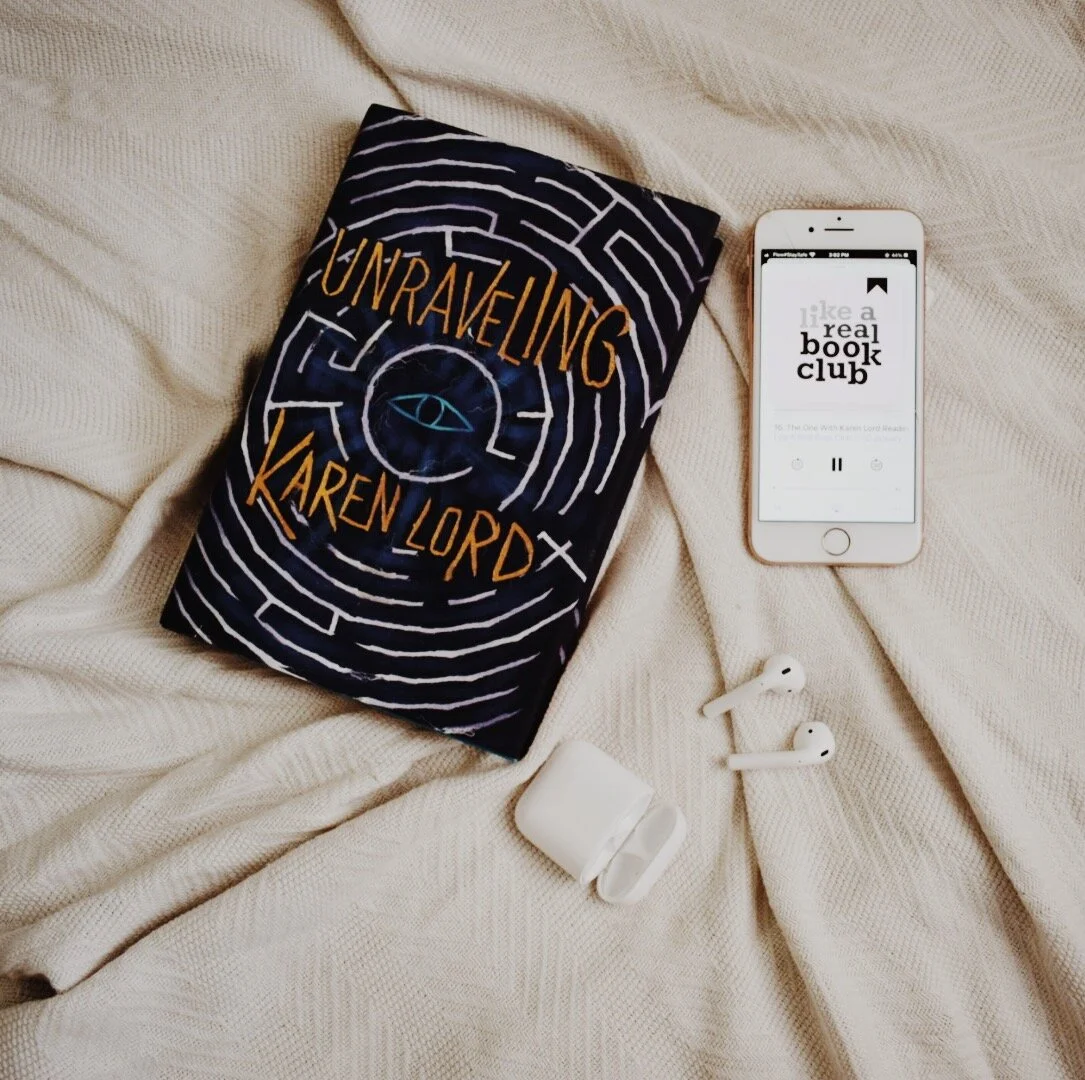
Episode 16 - The One With Karen Lord Reading 'Unraveling'
Karen Lord Bajan writer of speculative fiction and science fiction is highly praised in the Caribbean. Hear her read from her latest book Unraveling.
Listen to this episode on Spotify, Apple Podcasts, Google Podcasts, or wherever you listen to podcasts.
Episode 15 - The One With moon
A (very) special episode featuring the artist moon talking about their forthcoming poetry collection, Breaking The Binary, a response to queer lives in Jamaica.
Listen to this episode on Spotify, Apple Podcasts, Google Podcasts, or wherever you listen to podcasts.
This episode features original work by moon:
3:57 Yemaya
8:00 Broken Lineage
11:45 Undefined
14:03 Broken Silence
18:05 Unsung
You can follow moon Instagram and find their music and art on their website www.earthandmoon.net
This special episode was sponsored by CATAPULT Arts Grant, American Friends of Jamaica, Kingston Creative, Fresh Milk Barbados and you - our sustaining patron members of RWL. To become a member of Rebel Women Lit join us at rebelwomenlit.com/join
Follow @RebelWomenLit on Instagram, Facebook and Twitter if you're interested in joining our (very queer, very Caribbean, always lit) community celebrating diverse & brilliant literature.
Transcript
That was the whole reason. I even added the photography into my book because I'm like so many people who may enjoy my work are never going to buy a poetry book. Like they're not, they're not even going to think about buying a poetry book because it's not who they are. And it's, yeah, it's very put into this niche and it's like, I don't know.
People have this idea in their head of who poets are and what poetry is for and who it's for. And I'm like, no, it's not about that. So yeah. Let's make more art for everybody.
So my name is moon. I'm a multi-disciplinary creative, I'm non binary. And I started writing my first book last year, but it's a collection of poems. It's actually, some of the poems are older than last year, but I started to putting it together last year.
I think my first interactions with Art, I'd have to attribute to my mother. And her family, because she comes from a very creative and musically and visually creative family. So she paints and draws and plays multiple instruments and sings. My grandparents sing and their siblings sing and everybody.
So I was always around art and music. And so I don't remember any part of my life, not including that. I feel like they probably would have been surprised if I wasn't artistically inclined in some way, just because it's been surrounding me. It's it's just been a part of my life. I've always been an artist.
I think I knew from, I was very young. I used to tell people when I was a kid, I was going to be a famous musician. I don't really care for fame anymore, but you know, that was, um, that was it for me. So I've always known that art is my life.
I actually have songs written down from when I was seven. And when I look back at the lyrics, even though I would never perform them now, they've always touched on, exploration of self and different spiritual aspects, you know, so I spent a lot of time outside as a kid and just observing animals, and plants and, just being in nature. And I think that has always informed and inspired me in a lots of ways and just thinking about my own existence. So those are definitely recurring themes. They have expanded into more specifically spiritual topics where I wouldn't have had the words for those things as a child, but, it has always continued. And then love, you know, we write about relationships, love loss, pain and joy. Um, so it's just the human existence in all its different intricacies.
This project actually began as a deeper exploration of self. So I had visited my grandmother, who is in her nineties, January of last year -I hadn't seen her for years, she lives very far- and in listening to her stories - and she has Alzheimer's 90 -so she repeated a lot of the same stories over and over again, but there were always different elements coming up and I started recording them. And I started just writing things down and I was looking at myself and looking at my heritage, being so diverse and just thinking about all the different avenues all of my ancestors took to get to me, you know, and all the things that makeup who I am, where the parts of who I am, come from them. And what has been informed by my own, specific experiences.
So I started writing all of those things down and I created a project called Identity where I wanted to just speak to other mixed persons, especially of Jamaican and or other Caribbean heritage, because I think we have a very, I mean, I can't speak for all the other islands with, I know Jamaicans are very much like "If you're not more here, you're not Jamaican." You know, in a lot of ways.
And then I just always felt like I was floating between identities between places and I, I didn't have any grounding in who I was. And so I started putting together this, this thing, and it was more for my own healing.
The queer mentorship opportunity came up and I already had some poems that were touching on being queer about my coming out at 25, you know, What it took for me to get there and just all of those things.
And so I applied for the mentorship and created a branch of the Identity project that would specifically explore queerness in Jamaica. So that was what led me here. And that project started last September. We've had some delays due to COVID, but it's been about a year [and] odd in the works now.
I feel like the book's going to end up being put into sections. The first parts of it are definitely going to be about, or it is about my first relationship with a woman, and not just the relationship itself, but what I was learning and experiencing within myself through that relationship. So it is still, you know, a journey of self-exploration and the idea to use the photos came from looking at my Instagram feed and realizing that a lot of the poetry I had written in the past two or three years at the time had come from inspirational photos.
So I would feel like posting a photo on Instagram and then posting the photo. All of a sudden this poem would start pouring out. And I wouldn't have had the intention to write a poem beforehand. So I said, okay, you know, maybe I can turn this into a thing. I don't necessarily want to keep all these pictures on the internet forever, but I like what I've been writing.
So when I expanded it beyond just exploring myself, I began asking persons if I could interview them, hear about their experiences being queer in Jamaica, and some persons who have left Jamaica and travelled abroad. And I asked them if I could take photos.
The newer poems are very, they're a combination of inspiration from the photos I take mixed with the information that came from the interviews.
And so I'm taking the stories of queer Jamaicans and turning them into poetry. And then also presenting us in a way that documents, who we are at this time. So who we are from 2019 to 2020, showing people that we exist, showing people that we like look like everyday people, you know.
There's a very Americanized view of queerness that I've discovered in interviewing non-queer persons here where they don't really see queer Jamaicans as something that even exists. You know? So I want to show people who we are. I want us to remember who we are, and I'm hoping that you know, it's going to become some kind of a timepiece, even if it doesn't get a lot of publicity right now that someday we'll be able to look back and say, this was a portion of the queer community in Jamaica in 2020. And I think that's cool. So I'm, I'm excited about putting all of it together.
It's such a mix of emotions. I can say. It was easier to approach queer people to interview. Then it was to do the non-queer interviews just because I had never gone up to a stranger and said, "Hey, you know, let's talk about homosexuality in Jamaica and let's talk about the buggery law. And, you know, by the way, I'm a lesbian." And just, you know, not knowing how people are going to receive that.
But it's been such a beautiful process and I've had some people be hesitant. I've had people refuse to be interviewed, but I haven't experienced any violence or negativity and I'm grateful for that.
I've had very open and honest and raw conversations. I've had people straight up tell me they're homophobic and don't agree with my existence, but still sit down and reason with me for a whole hour. And I think that's important. And I, I applaud them for being able to sit in front of something that goes against everything they believe in and still have a form of respect for me, you know, like they were telling me, "I don't agree with what you're doing. I don't agree with who you are, but I'm willing to hear you out. Let's talk." And that is important. I think it is a big part of what is going to shift how Jamaica sees and receives us.
I think I underestimated the heaviness of this project. There was a day I started researching the specific laws, like to find out the exact language of it. And then just seeing how many cases we had of asylum and what led the people to seek asylum. And I just started bawling. I just, I couldn't stop crying. I sat on the floor, just crying for like, at least an hour, because I just felt the weight of all of these, of all of the pain that people are experiencing, you know?
And it felt like mine for a minute and that was heavy. And so I had to stop and a lot of the. A lot of the pause in putting this together has come from that from just feeling the weight of everything and then doubting my ability to do it justice. Feeling like this project is, is not big enough to, to help anybody in some ways, but knowing that we have to start somewhere anyway.
So yeah, it's, it's a very emotional piece. It's a, it's a very emotional piece of work.
I know we have a lots of stories of pain of families rejecting us, but there have also been stories of families being accepting and welcoming from the get-go. And that, that is what I want to hear more of as well. The stories of pain definitely need to be told, you know, because that's part of our healing.
But I think it's encouraging to know that there are families in Jamaica who don't follow the globally perpetuated stigma, that we're the most homophobic country in the world.
I'm doing the work because I want us to be able to leave our house, our houses without being in fear for our lives, without being in fear of being sexually harassed or raped or anything.
I just wanted us to be able to live, you know,
So I'm gonna, I'm gonna wrap up this first book. I want to put the book out this year. I think it's important and vital that 2020 finishes with this project being put out in whatever, you know, at least in some form,
I didn't realize how much it would take from me or require of me when I first set out to do it. You know, so I'm trying to be gentle with myself also and give myself the room to pause when I need to it's a lot, but I'm doing it. And I'm proud of that.
This was a special episode of Like A Real Book Club produced with sponsorship from the CATAPULT Arts Grant, American Friends of Jamaica, Kingston Creative, Fresh Milk Barbados, and YOU our sustaining members.

Episode 14 - The One About Being "Forced Ripe"
Looking through the lenses of popular book to TV adaptations, Tiffany Jackson’s Grown, Jamaican history and our own personal experiences, we talk about the insidiousness of glamourized paedophilia, the over-sexualization of Black women’s bodies, why we should leave Minister Marion Hall alone and...so much more.
Listen to this episode on Spotify, Apple Podcasts, Google Podcasts, or wherever you listen to podcasts.
Whenever the three of us gather to record for this podcast, something (the Lorde/universe/whoever) softly nudges us towards a conversation we had no intention of having. These conversations are hard and uncomfortable but with beautiful friends that can hold space for you, they become significantly easier.
In this new episode of Like A Real Book Club, we traverse a very dark and all too common feature of Caribbean girlhood and womanhood by looking at sexual grooming and sexual violence. Looking through the lenses of popular book to TV adaptations, Tiffany Jackson’s Grown, Jamaican history and our own personal experiences, we talk about the insidiousness of glamourized paedophilia, the over-sexualization of Black women’s bodies, why we should leave Minister Marion Hall alone and...so much more.
Further Reading and References
Film
Lady Bird (2017 Film)
Book-to-TV Adaptations
Pretty Little Liars
Gossip Girl
Books/Essays
Grown by Tiffany Jackson
“Property Rights in Pleasure: The Marketing of Enslaved Women’s Sexuality”, by Hilary McD. Beckles - Caribbean Slavery in the Atlantic World
“Queering Feminist Approaches to Gender-based Violence in the Anglophone Caribbean” by Tonya Haynes and Halimah A.F DeShong
Play/Video
Dancehall Queen - https://youtu.be/XAm5n8aQxhI
For Harriet, “Why do Black women performers HAVE to sell sex?“ - https://youtu.be/UeWlySR4wBU

Like A Real Book Club: Episode 13 - The One About Mental Health & Jamaican Churches
Ashley, Jherane and Kristina have an intimate conversation about their experiences with churches, mental health, and of course books.
Listen on Apple Podcast, Spotify, Google Podcast, or search for it wherever you listen to podcasts.
You know the end of Ari Lennox' 'Chicago Boy' where she asks everyone who is not her friend to leave?
That's how this episode feels.
Ashley, Jherane and Kristina have an intimate conversation about their experiences with churches, mental health, and of course books.
Books Mentioned:
The Mothers by Brit Bennett
Transcendent Kingdom by Yaa Gyasi
Queenie by Candice Carty-Williams
PATSY by Nicole Dennis Benn
The Last Warner Woman by Kei Miller
Augustown by Kei Miller
Like A Real Book Club: Episode 12 -Because We Owe You Five Book(ish) Episodes
One thing about us, we’re gonna intend to talk about one thing and end up talking about 27. It’s been such a long time since we’ve done an episode that everything came pouring out of us. But that’s the beauty of a book club (and the podcasts that are like them) - you get to gush about your favourite things, the things you hate and everything in between with amazing people.
In this episode of the podcast, Ashley, Jherane and Kristina catch each other up on what they’ve been reading; all the reasons Goodreads sucks (and why we’re switching to Storygraph); our vendetta against Alfredo pasta and, perhaps more importantly, why we think Spice and Shenseea would be big fans of Talia Hibbert.

Like A Real Book Club: Episode 11 - Verandah Chat and Reading with Diana McCaulay, author of Daylight Come
We interviewed award-winning author and environmental activist Diana McCaulay, about her latest novel Daylight Come
Listen to this episode on Apple, Google, Spotify, or wherever you listen to podcasts.
We’re deep into 2020 now, and both the days, and the years to come, look darker than they have in a very long time. No, we’re not (just talking about COVID-19) we’re talking about our rapidly changing climate. So why not curl up with an appropriate book?

Like A Real Book Club: Episode 10 - Verandah Chat and Tea with Curdella Forbes, author of A Tall History of Sugar
We got to chat with Curdella Forbes, author of her latest award-winning novel A Tall History of Sugar
Get a cup of your favourite tea, cut yuh ten and enjoy our interview with the very masterful, Curdella Forbes.
Kristina and Jherane sat down with Curdella on her verandah with three cups of tea, beautiful rolling hills before us and some nice, cool breeze washing over us. At least that’s the imagery we had in our heads while we sat in our respective homes chatting with the Curdella Forbes, Jamaican author of A Tall History of Sugar.
Like A Real Book Club: Episode 9 - 100 Caribbean Books That Shaped Our World
We teamed up with BOCAS Lit Fest to select (not 100) Caribbean books that had an impact on our lives.
Book mentioned:
Krik? Krak! by Edwidge Danticat
Annie John by Jamaica Kincaid
A Small Place by Jamaica Kincaid (included in our Patreon travel club)
Beka Lamb by Zee Edgell
Gardening in the Tropics by Olive Senior
The Fear of Stones and other Stories by Kei Miller
Caribbean Slavery in the Atlantic World by Verene Shepherd
How Europe Underdeveloped Africa by Walter Rodney
Like A Real Book Club: Episode 8 - A Tall History of Sugar Book Club Meetup
We talk about the Caribbean's legacy of sugar in the form of our education and careers, economic and political life, and even our diets... and of course the book.
Book mentioned:
A Tall History of Sugar by Curdella Forbes

Like A Real Book Club: Episode 7 - Learning to Love Complicated Mothers
Listen to this episode on Apple Podcasts, Spotify, Google Podcasts or search ‘Like A Real Book Club’ wherever you listen to podcasts
We meditate on the complexities of Caribbean motherhood - ladened with a history of patriarchal violence that has architected the tenuous, terrible and beautiful bonds we form with the matriarchs in our lives (and, of course, how these relationships are depicted in Caribbean literature).
Book mentioned:
Learning To Breathe by Janice-Lynn Mather
Little Fires Everywhere by Celeste Ng
Patsy by Nicole Dennis-Benn
Here Comes The Sun by Nicole Dennis-Benn
The Star Side of Birdhill by Naomi Jackson
Working Miracles: Women's Lives in the English-Speaking Caribbean by Olive Senior