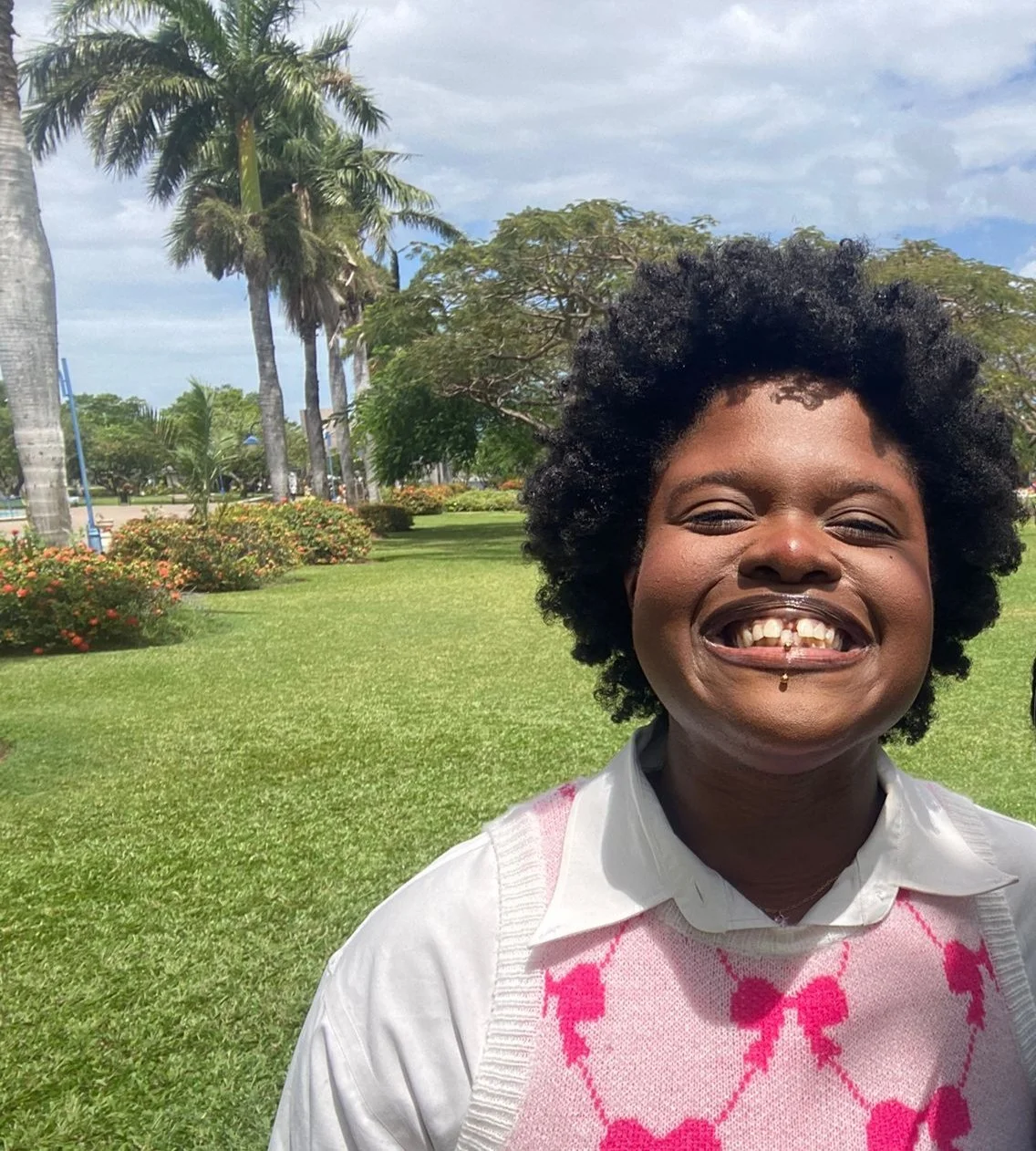
Queer Rights Will Not Make it Much Further Without Feminism by Saint-Sean Asli
Saint-Sean Asli is an organiser and writer based in the Caribbean, working on queer liberation and social movements. In this essay, they explore the Caribbean LGBTQ+ movement's unfinished reckoning with patriarchy.
Reading Time: 4 mins
Exactly a month ago, I was at a regional LGBTQ+ organising conference. It was a long week. There were many lessons and equally as many gripes. One thing I understood intimately by the end of the week is that somehow, the LGBTQ+ agenda had advanced without actual feminist praxis. To be clear, I regularly grapple with the material application of feminism in popular culture; so much so that, in my writing and organising, I prefer to refer to gender abolition rather than feminism. However, being in that space for a week reminded me that my position as cheekily ‘post-feminist’ was a privileged one.
The LGBTQ+ Rights movement in the Caribbean was born out of HIV/AIDS advocacy in the region. The goal of providing care and eradicating stigma from people living with HIV/AIDS grew into a very necessary defence of certain demographics most at risk for viral transmission. Naturally, this centred populations of cisgender gay men. Cisgender gay men were not the only people affected by HIV/AIDS. However, sociocultural homophobia meant that they were the scapegoats for a disease that’s killed millions of people over five decades. Therefore, alongside HIV/AIDS activism, the gay rights movement emerged out of a need to advocate for the dignity of gay men and their right to life.
A constant refrain born out of HIV/AIDS organising in the States was “lesbians don’t get AIDS, they only die from it”. Contradictory on its face, the statement is a critique of how the focus on cisgender gay men invisibilised lesbian populations affected by HIV/AIDS until it was time for their deaths to be counted. The idea that HIV/AIDS was not a lesbian issue led to countless lesbians dying from the disease through the neglect of their lateral community.
Unfortunately, the state of LGBTQ+ organising in the region today retains the flaws of its origins.
At the aforementioned conference, a presentation was made including a critique of the “toxic masculinity” inherent to sports that kept “LGBT” athletes closeted. Interjections made by several queer women and non-binary people highlighted that for many queer and otherwise gender non-conforming women, sports of all kinds and at all levels were a safe haven where lesbian and queer women largely outnumbered their heterosexual counterparts. It was also made clear that the analysis being posited only applied to cisgender gay men and as such, should not be said to broadly represent “LGBT” people because the acronym largely involved people that were not cisgender gay men, for whom gender altered their experiences of queerness and homophobia beyond “toxic masculinity”.
Later in the week, a conversation about coalition building led to people saying “alliances” should be made between the queer rights movement and the nascent abortion rights movement, and it would require “LGBT people” to work together on “women’s issues like abortion” to form and achieve common goals. Again, the women and transgender people in the space highlighted that largely, the abortion rights movement in the Caribbean had queer women and transgender people at the helm and also, abortion was not and had never been the sole purview of cisgender, heterosexual women. Furthermore, the dichotomisation of “women” and “LGBT people” highlighted that for many cisgender gay men, the LGBT acronym was another way to talk about the needs of cisgender gay men specifically.
The centrality of the experiences of cisgender gay men in the LGBTQ+ Rights movement made sense only briefly at the outset of the movement itself. However, within a decade of the first open gay rights organisations, lesbians and transgender people were highlighting the male chauvinism inherent to the worldview of cisgender gay men. These men were oppressed by patriarchy, but did not have the tools to keep themselves from reproducing that oppression onto queer people marginalised by gender.
This chauvinism is currently being sustained in the present-day LGBTQ+ organising spaces emerging in the Caribbean. Only the rapid incorporation of feminist organisers into queer spaces and feminist praxis into organising methodologies will prevent queer women and transgender people from being left behind by cisgender gay men in the movement. LGBTQ+ spaces should, by default, highlight the importance of gendered oppression and commit to the necessity of dismantling patriarchy if they hope to make it into a future without homophobia.